1. Establish why the tooth needs a crown
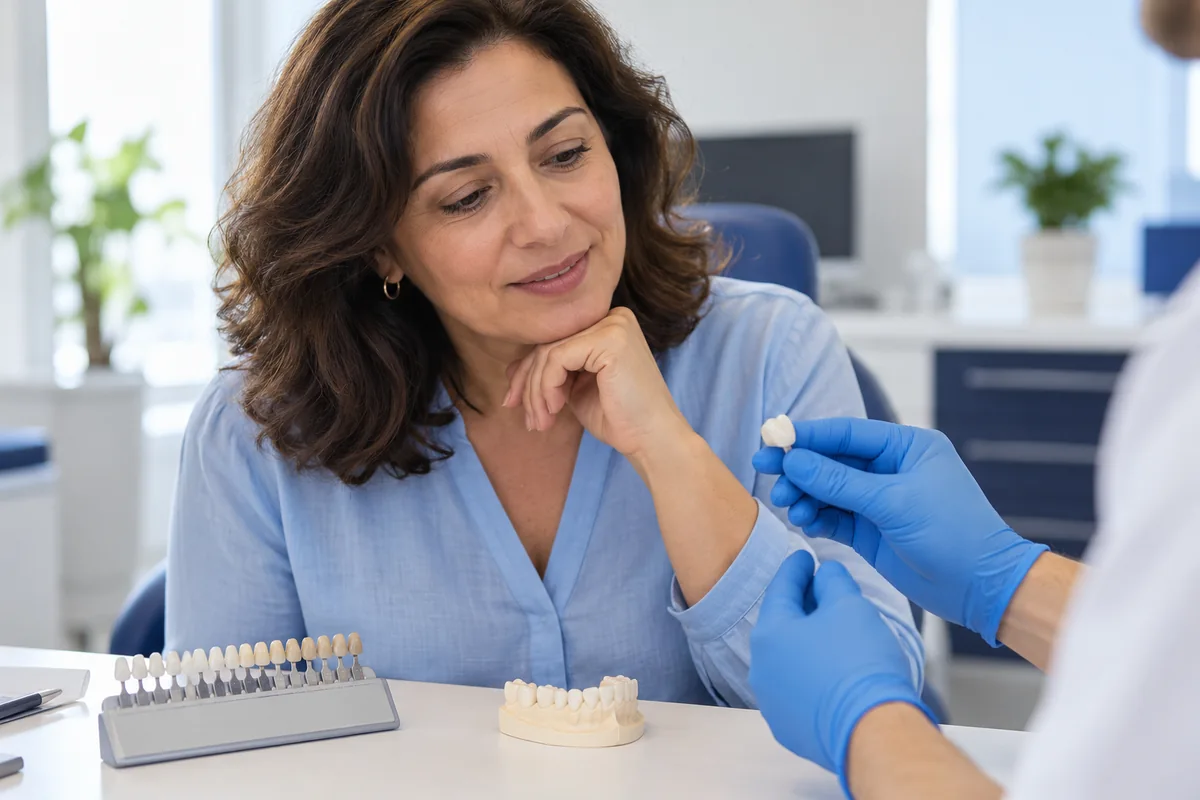
A crown covers a prepared tooth to restore its shape and function. It may be considered after a large filling, fracture or extensive tissue loss. A small chip or discolouration does not automatically require a full crown; a filling or a partial-coverage restoration may be considered instead.
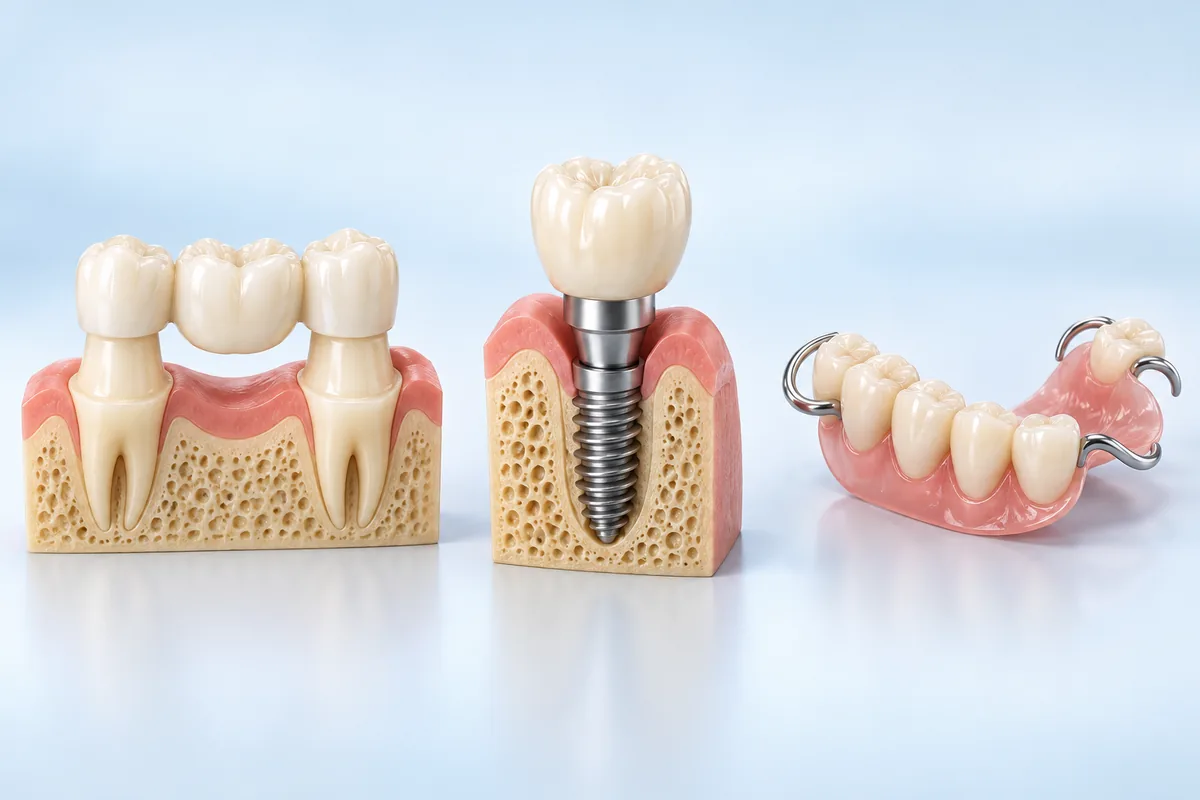
A veneer mainly covers the front surface. An implant crown sits on an implant connection, rather than a natural tooth. Similar-looking restorations can therefore have different foundations and involve different treatment.
Sources: ADA — Crowns · ADA — Veneers · Leeds Teaching Hospitals NHS — Dental implants
2. Zirconia describes a family of ceramic options
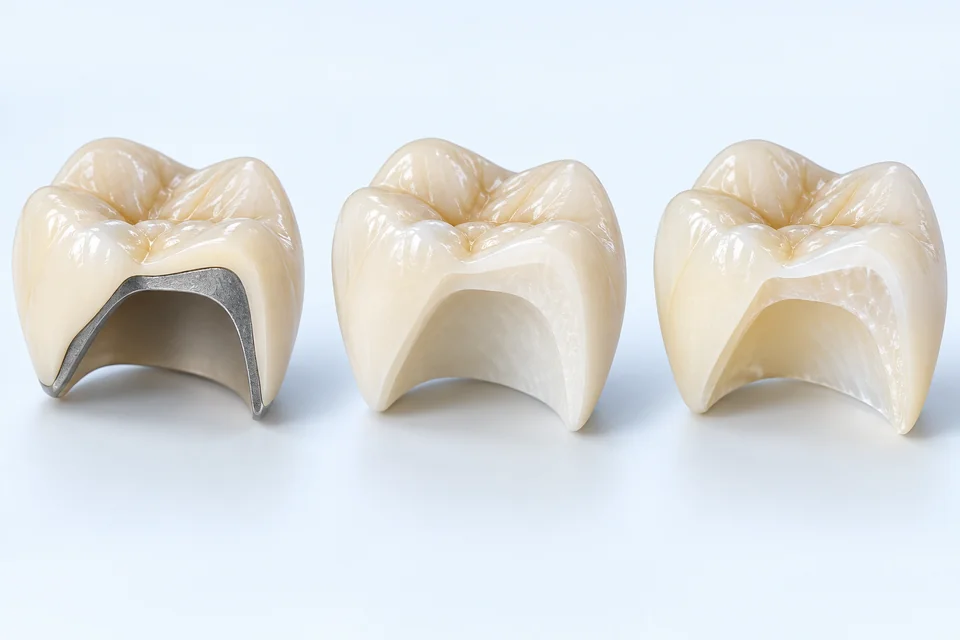
Zirconia crowns can be monolithic, meaning one piece, or have a separate aesthetic ceramic layer over a zirconia framework. Different formulations also have different optical and mechanical properties. “Zirconia” alone does not explain the design.
Ask which type is proposed and why. Matching neighbouring front teeth raises different questions from restoring a heavily loaded back tooth. A strength figure is only one property, not proof of suitability for your tooth and bite.
3. What does E.max mean in your treatment plan?
E.max often means lithium-disilicate glass-ceramic in conversation. However, IPS e.max is a product family that also includes zirconia. Request the full material name; the glass-ceramic option discussed here is lithium disilicate.
Its translucency and shades can help recreate a natural appearance. Suitability also depends on the underlying tooth colour, remaining structure, space and attachment method. Using this ceramic for different designs does not mean that veneers and crowns are interchangeable.
Sources: Ivoclar — IPS e.max CAD lithium-disilicate glass-ceramic · Ivoclar — IPS e.max ZirCAD zirconia portfolio
What is behind the material name?
| Option | Structure | A question for the appointment |
|---|---|---|
| Zirconia | Monolithic or layered with aesthetic ceramic; formulations vary | Which zirconia and design are proposed, and why for this tooth? |
| Lithium-disilicate glass-ceramic | One glass-ceramic option commonly described as E.max | What is the full product name, and why does it suit the appearance and bonding needs? |
| Metal-ceramic | Metal-alloy framework with tooth-coloured porcelain outside | Which alloy is used, and how are appearance, allergy history and design addressed? |
4. Where metal-ceramic crowns fit into the discussion
A metal-ceramic crown combines a metal-alloy framework with tooth-coloured porcelain. Both components and their combination matter. Metal does not automatically mean poor quality; metal-free does not make other considerations irrelevant.
Discuss appearance where the tooth shows when you smile. Mention known metal allergies before treatment and ask about the alloy. Compare the reasons and limits of the options offered for the same tooth, rather than labelling every material universally good or bad.
5. Look beyond the visible surface
Alongside shade, discuss seating, margins, contact with neighbouring teeth and comfort when biting. A smile photograph cannot reliably establish these details. Branding and digital manufacturing do not replace clinical checks.
At fitting, explain anything unusual: does this tooth touch first, or does its shape bother your tongue or speech? Your observations complement your dentist’s assessment. Surface finishing also matters; where ceramic needs adjustment, the relevant finishing and polishing instructions still apply.
Sources: Oral Health Foundation — Crowns
6. Five decision traps worth avoiding
Five traps are worth avoiding. First, choosing only by material name: ask why it suits your tooth. Second, requesting the brightest shade without considering neighbouring teeth. Photographs can describe preferences, but another person’s result is not your treatment plan.
Third, assuming a minor cosmetic change requires a full crown. Fourth, overlooking grinding or gum problems during assessment. Fifth, comparing prices without checking whether preparation, temporary restorations and reviews cover the same work.
7. Understand the fitting process and later care
Your dentist assesses the tooth and gums before discussing the options. If a crown is planned, the tooth is prepared and an impression or digital record taken. A temporary crown may be needed. The final restoration is checked for fit and comfort before securing it; timing varies.
Raise shape and shade concerns before final fitting where possible. Report a high bite, loosening or persistent discomfort afterwards. Crowns do not make the underlying tooth immune to decay; cleaning and reviews remain necessary.
Sources: NHS — Dental treatments · Oral Health Foundation — Crowns
8. Ask for an estimate you can actually compare
Request a written plan: which tooth, material and design are proposed, and why? Ask whether rebuilding the tooth, temporary restorations, fittings and reviews are included when needed. Not everyone needs every procedure.
There is no universal ranking of zirconia, lithium disilicate and metal-ceramic crowns. Tooth structure, chewing, appearance and manageable maintenance contribute to the decision. Understanding why a recommendation suits you is more useful than leaving with a material name alone.
Common questions
Is zirconia better than E.max?
Neither suits everyone. Clarify the E.max product, then compare the tooth, remaining structure, appearance and bite. The name alone is not an individual recommendation.
Are porcelain and zirconia two completely separate options?
The terms can overlap. Zirconia can also have an aesthetic ceramic covering, while metal-ceramic has a metal framework. Ask which design is proposed.
Is a veneer the same as a crown?
No. Veneers mainly cover the front; full crowns surround a prepared tooth. The appropriate preparation and design require assessment.
Does every crown require root canal treatment first?
No. The tissues inside the tooth are assessed separately. If root canal treatment is recommended, ask your dentist about the findings and reason.
Will a more expensive crown definitely last longer?
Not necessarily. Tooth condition, design, treatment, chewing and care also matter. Ask about individual risks rather than a promised lifespan.
Can the visible tooth on an implant be zirconia?
Yes. However, the crown and the implant in bone are different components. Check which crown and connection are included in the plan.
Should I just wait if my new crown feels too high?
Tell your dentist if it touches first or discomfort persists. Do not file the crown yourself or use household adhesive.