
1. Which part does “implant” refer to?
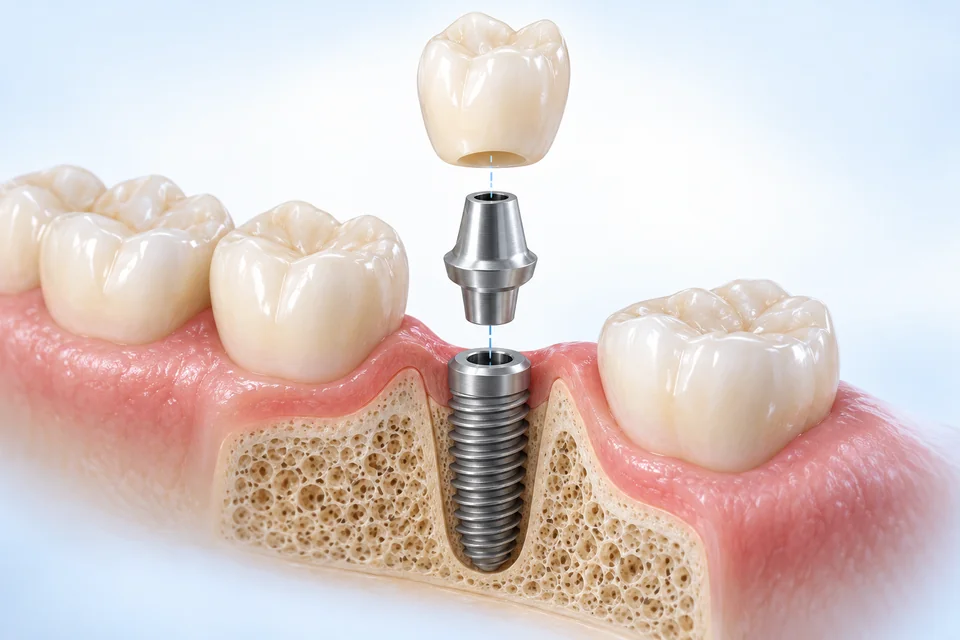
People often use the word implant for the complete replacement tooth. A single implant restoration, however, has distinct parts: a fixture placed in the jawbone, a connecting component called an abutment and the visible crown. The fixture provides support in place of a missing root; the crown is the tooth-shaped part used for chewing.
When discussing a fee, ask whether it covers placement of the fixture alone or also includes the abutment and crown. You do not need technical expertise to ask for a clear explanation. Understanding these terms at the start helps you avoid comparing the price of one stage with the price of a complete restoration.
Sources: American Academy of Periodontology — Single Tooth Dental Implants
2. Know the brand, but ask why it is being recommended
Ask which brand and model will be used, and keep that information with your treatment records. Reading many reviews of a brand does not explain why a particular system has been proposed for your mouth. A useful companion to “Which implant is best?” is “Why are you recommending this option for my treatment?”
A familiar name, country of manufacture or another patient's experience should not be the whole basis for your choice. Ask how the proposed system relates to your plan, how to obtain its details later and what records to retain if a component needs attention. The name on the product cannot replace an assessment, a clear plan or answers you understand.
3. Similar gaps can need different plans
Assessment considers gum health, the available bone, neighbouring teeth and your general health. Tell the team about medicines and smoking. If there is insufficient bone, an additional bone procedure may be considered; not everyone needs one.
If a friend needed only an implant but you have been advised to consider another procedure first, ask what finding explains the difference. What is the extra procedure intended to achieve? What alternatives remain without it? How would it change the timetable? A more extensive plan is not automatically a better one. You should understand why its proposed stages are relevant to your situation before comparing it with someone else's care.
Sources: Guy's and St Thomas' NHS — Dental implants: overview · Guy's and St Thomas' NHS — Having a dental implant · Leeds Teaching Hospitals NHS — Dental Implants
What should an implant estimate clarify?
| Part of the plan | Question to ask |
|---|---|
| Surgical stage | Are placement and any necessary additional procedures included? |
| Abutment and crown | Which components and crown material are proposed? |
| Temporary tooth | Is one needed, when will it be used, and is it included? |
| Review and maintenance | How are check-ups, adjustments and possible repairs charged? |
4. Clarify what a short treatment timetable actually means
Some people can receive a replacement tooth on the day an implant is placed, but this is not suitable in every case. Placement day and the day healing is complete or final teeth are fitted do not necessarily coincide. Receiving temporary teeth does not mean that every stage of treatment has finished.
Tell your dentist if a short timetable matters to you, then ask which planned teeth are temporary and which are final. Discuss eating during healing, any period without a tooth and what happens if the timetable changes. Mention work, travel or an important occasion early. Treat a headline about speed as a reason to ask questions, rather than as a personal treatment schedule.
Sources: Oral Health Foundation — Understanding Dental Implants
5. Compare estimates with the same scope
Start with the written plan. Ask whether its items include the implant fixture and surgery, the abutment, the crown material, temporary teeth and any proposed extraction or bone procedure. These are possible discussion points, not a list of procedures that everyone requires or a promise that they are included in a quoted fee.
If one estimate covers surgery alone and another includes the replacement tooth, their totals describe different things. Clarify fees for reviews, later adjustments and possible repairs. You can also ask how a new finding during treatment would be discussed and reflected in an updated estimate. Share your budget openly. The aim is to understand what you would be agreeing to, rather than to select a plan by its total alone.
Sources: General Dental Council — Communicate effectively with patients
6. Give the replacement tooth its share of the conversation
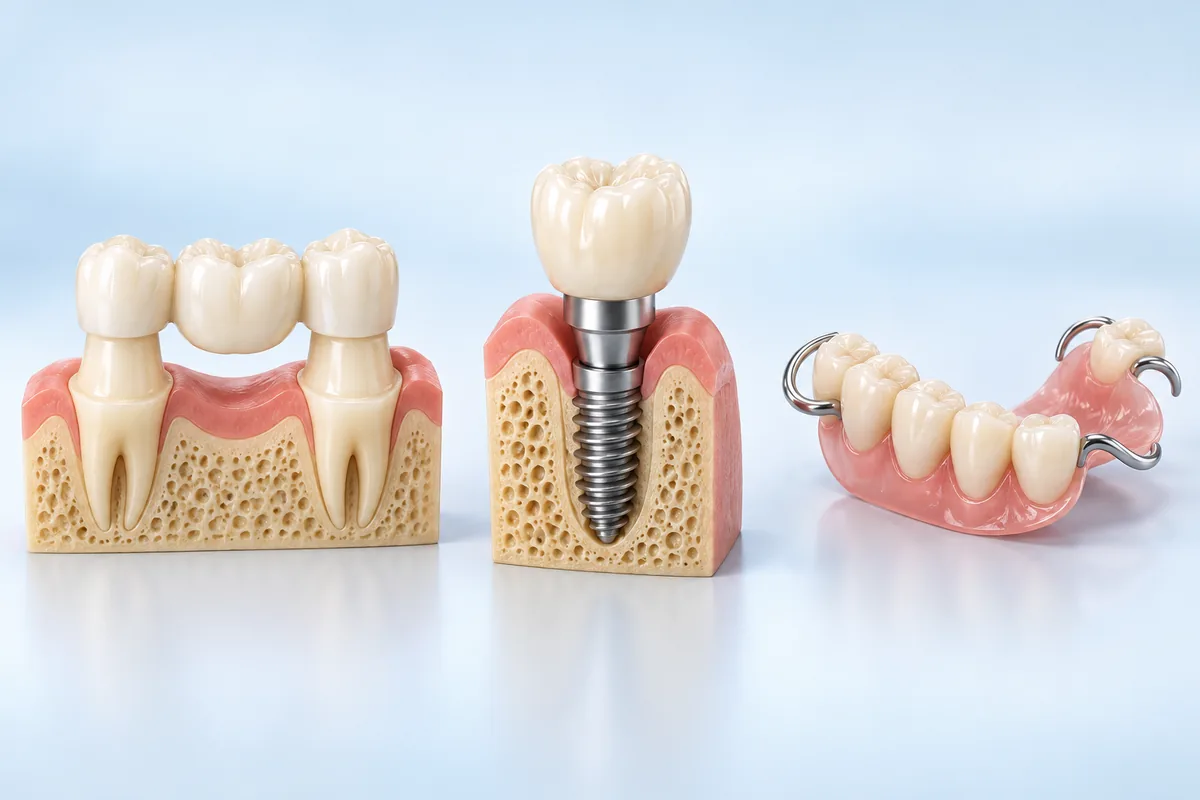
Making the replacement tooth is a distinct stage after implant placement. It includes records of the mouth and checks of how the components fit and the teeth meet. A single crown, bridge and removable denture are different designs; the word implant alone does not describe the restoration above it.
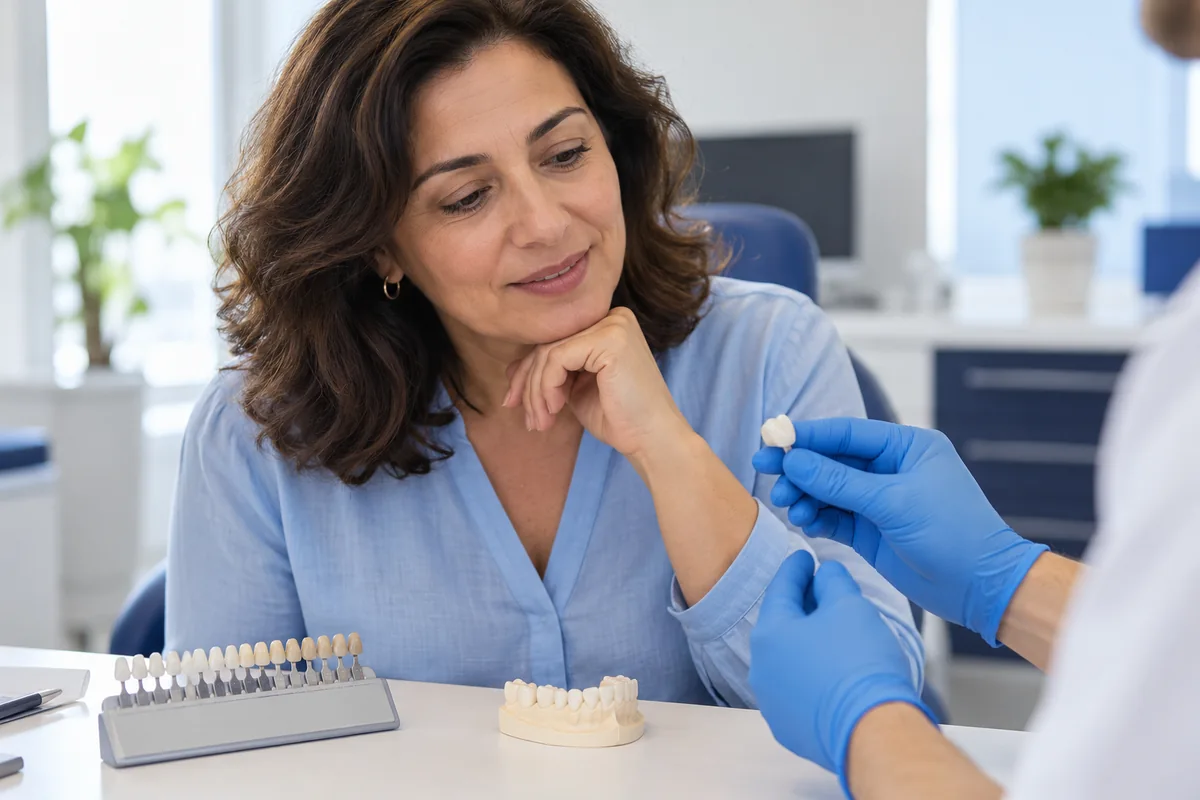
Ask which crown material is proposed, how you will reach the area for cleaning and how future attention would be approached. Explain your appearance priorities for a visible tooth and any difficulty with chewing at the back of your mouth. Include these everyday concerns in the discussion, rather than limiting it to a colour or material name.
Sources: Guy's and St Thomas' NHS — Having a dental implant · Leeds Teaching Hospitals NHS — Dental Implants · American Academy of Periodontology — Single Tooth Dental Implants
7. Long-term use still involves maintenance
Inflammation can affect the tissues around an implant and, in some cases, its supporting bone. Bleeding with brushing, redness or tenderness should be assessed. The fact that an implant does not develop tooth decay does not make the surrounding tissues immune to disease.
Ask for a cleaning demonstration and an explanation of the review schedule. Both implants and the restorations they support need ongoing follow-up. If a guarantee is offered, clarify its duration, what it covers and the conditions attached to it. It is also helpful to know whom to contact if a problem develops. A discussion about long-term expectations should include maintenance as well as what happens if attention is needed later.
Sources: Guy's and St Thomas' NHS — After having a dental implant · American Academy of Periodontology — Peri-Implant Diseases · General Dental Council — Communicate effectively with patients
8. Take a short question list to your consultation
Before deciding, check that you understand why implants are being suggested and what the alternatives are. Which brand and model are proposed? What abutment and replacement tooth are planned? Why is an additional procedure needed? Are temporary teeth included? Which stages appear in the estimate? How will reviews and maintenance work?
You do not have to remember every answer immediately. Ask for a copy of the plan, request plain explanations of unfamiliar terms and return to anything left unclear before agreeing to care. Research becomes more useful when it helps you understand a decision, rather than simply collect prices. This article is preparation for that conversation; an examination is needed to assess implant suitability and develop your individual plan.
Sources: General Dental Council — Communicate effectively with patients
Common questions
Is the most expensive implant always the best option?
Price alone does not establish suitability. Ask why a system is proposed and compare the replacement tooth and the scope of care. Two totals do not necessarily represent equivalent plans.
Does an implant quote include the crown?
Check the written estimate. The fixture, abutment and crown are distinct components. Do not assume that a fee mentioned verbally includes every stage of your treatment.
Should I keep the implant brand and model details?
Yes. Ask your dentist for the system's brand and model and retain them with your records. Share them if another dentist needs to assess the implant later.
Does everyone need a bone graft?
No. This depends on the available bone and the proposed treatment. If one is suggested, ask about its purpose, alternatives and effect on the overall timetable.
Are teeth fitted on the same day always the final teeth?
No. Ask whether they would be temporary or final in your plan. Same-day replacement teeth are not suitable for everyone, and the exact meaning should be explained before treatment.
Do I need reviews if my implant does not hurt?
Yes. Implants and their restorations need regular follow-up. Absence of pain does not remove the need for care. Report bleeding, redness or any other change as well.
Can an implant be guaranteed to last for life?
A trouble-free lifetime cannot be guaranteed. Ask which components or procedures any offered guarantee covers and what its conditions are. A guarantee is separate from the need for continuing maintenance.