
1. Find out where the colour change comes from
Not every darker-looking tooth has the same cause. Surface marks from tea, coffee or tobacco differ from changes within the tooth. Natural colour can change with age, while a tooth with a previous injury or root canal treatment may look darker than its neighbours. Before deciding how light you want your teeth to become, ask what is responsible for the change.
Tell your dentist when you first noticed it and whether it affects one tooth, a particular area or the whole smile. Mention discomfort, sensitivity and old injuries. A newly darkened single tooth needs assessment rather than an assumption that it only needs cosmetic treatment. These differences help explain why a product that suited a friend may not be the right starting point for you.
2. Cleaning and whitening have different jobs
Professional cleaning removes hardened deposits from tooth surfaces. Suitable surface cleaning and polishing may also reduce external stains, making teeth look cleaner and brighter. That is different from chemically lightening their underlying natural colour. The distinction matters when comparing treatment names or deciding whether your expectations have been met.
Whitening products target colour in natural teeth. Bleaching gel does not remove tartar, treat decay or replace care for gum disease. You may find that cleaning provides the improvement you wanted and choose not to whiten afterwards. Even when your concern is entirely about appearance, assessing the health of your teeth and gums helps establish which options make sense.
Sources: American Dental Association — Whitening · NHS — Dental treatments: scale and polish
3. In-office treatment and dentist-supervised home whitening
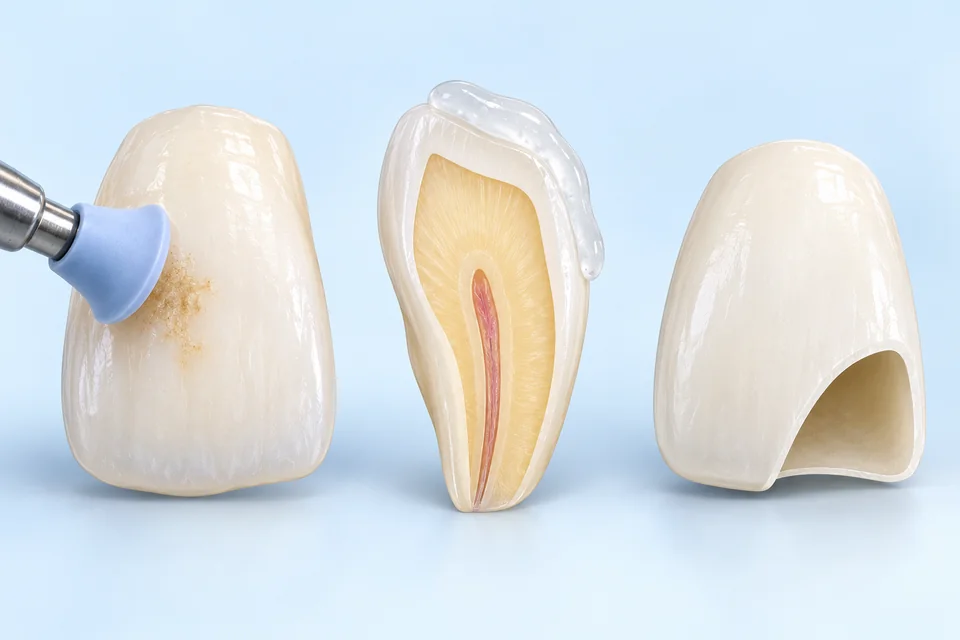
In-office whitening involves the controlled application of gel with measures to protect the gums. Dentist-supervised home whitening generally uses trays made to fit your teeth and a specified product and schedule. Home treatment in this context does not mean experimenting with any kit advertised online.
The choice depends on your mouth, existing sensitivity and your ability to follow the programme. Let the dentist know whether attending appointments or managing a home routine is easier for you. A stronger gel, longer exposure or a light-emitting device is not, by itself, proof of a better result. Do not change the prescribed product or wear time to speed things up.
Sources: American Dental Association — Whitening · Oral Health Foundation — Tooth whitening
What does each option aim to do?
| Option | Main purpose | Keep in mind |
|---|---|---|
| Professional cleaning and suitable stain removal | Remove deposits and some external stains | This is different from bleaching natural tooth colour. |
| Dentist-supervised whitening | Lighten the colour of natural teeth | Sensitivity and gum irritation can occur; results vary. |
| Whitening toothpaste | Primarily reduce surface stains, depending on the product | Do not expect fillings and crowns to lighten alongside natural teeth. |
4. What happens to fillings and crowns?
Natural teeth may lighten, but composite fillings and ceramic crowns do not bleach in the same way. The visible restoration on an implant is also different from a natural tooth. If you already have work on front teeth, a colour difference may become more noticeable as the surrounding teeth lighten.
This does not mean every existing restoration needs replacing. Discuss its condition, its appearance and your expectations first. If a new front-tooth filling or crown is planned, ask where whitening fits into the sequence. It is more useful to understand how existing and proposed restorations will match than to choose an isolated shade sample without that context.
Sources: NHS — Teeth whitening · American Dental Association — Whitening · Leeds Teaching Hospitals — Tooth whitening
5. Is whitening safe, and what about sensitivity?
A promise that whitening has no possible downside would be misleading. Temporary tooth sensitivity and gum irritation can occur. Existing discomfort, gum health, the chosen product and how it is used all matter. Starting before an examination can leave an underlying dental problem unrecognised.
Do not interpret pain as evidence that the product is working or respond by increasing exposure. Ask in advance what to do if discomfort develops, and report symptoms that are significant or persist. Cosmetic whitening is generally not recommended during pregnancy or breastfeeding; discuss postponing it with your dentist. Children and adolescents need an assessment appropriate to their age and dental development. An adult routine found online should not be adapted for a child.
Sources: NHS — Teeth whitening
6. How many sessions, and how long will it last?
Starting shade, the reason for discolouration and the method vary, so no single session count or final shade applies to everyone. Comparing your teeth with a friend's result or a social-media photograph can be unhelpful. Lighting and camera settings influence appearance; ask how your own starting shade and progress will be recorded.
The effects of whitening are not permanent. Staining may return over time, with tobacco, drinks and everyday care influencing the result. Whether a top-up is appropriate should be assessed rather than assumed. If you have an event in mind, discuss timing early. Extending the application yourself at the last minute is not a substitute for planning.
7. Common home-whitening mistakes
Lemon, vinegar and harsh scrubbing mixtures are not safe simply because they are described as natural. Acid and abrasion can damage tooth surfaces. Charcoal, oil pulling and similar social-media suggestions should not be treated as equivalent to an established whitening treatment. Household cleaning chemicals must never be used in the mouth.
Whitening toothpaste is also different from professional bleaching: many products mainly help reduce surface stains. Combining several products or brushing more forcefully does not safely accelerate the process. Avoid online kits with unclear ingredients, instructions or provenance. Bring the product name or packaging to a consultation so that your dentist can discuss what it actually contains and whether it is appropriate.
Sources: ADA MouthHealthy — Natural teeth whitening · British Dental Association — Online whitening product risks · ADA MouthHealthy — Toothpaste
8. Questions that make a consultation more useful
Start with three questions: 'Is the colour on the surface or within the tooth?', 'What improvement might cleaning alone provide?' and 'Could my fillings or crowns look a different colour afterwards?' Then clarify the method, review appointments, what to do about discomfort and what the overall fee covers. Those details make a comparison more meaningful than a treatment label or a promotional image.
Explain the change you are looking for in everyday terms. Do you want a subtle improvement or a more noticeable change? A single very white shade is not necessary for every smile. The useful decision is one that preserves healthy tooth structure, fits your circumstances and leaves you clear about what treatment can and cannot achieve.
Common questions
Will a dental clean whiten my teeth?
Removing some external stains can make teeth look brighter. That is different from lightening natural tooth colour with a bleaching gel.
Does whitening work by scraping away enamel?
No. Appropriate bleaching aims to lighten colour using a gel, not scrape away enamel. Acidic or abrasive home mixtures are different and can be harmful.
Is in-office whitening always better than home treatment?
There is no single best approach for every patient. The suitability of dentist-supervised options depends on oral health, expectations and how easily you can follow the programme.
Can I have whitening if I already have a crown?
It may be considered, but the crown will not change shade with bleaching. Discuss any possible mismatch with natural teeth before deciding.
My teeth are already sensitive. Should I start?
Have the cause assessed first. Tell your dentist about your symptoms and discuss suitability, alternatives and what to do if discomfort occurs.
Can I use a standard kit on one dark tooth?
Do not start without assessment. The cause and any previous treatment need checking; a different approach from general whitening may be considered.
Do I need crowns after whitening?
No. Whitening and crowns are separate treatments. Replacing a restoration or placing a new crown requires its own assessment and is not an automatic next step.