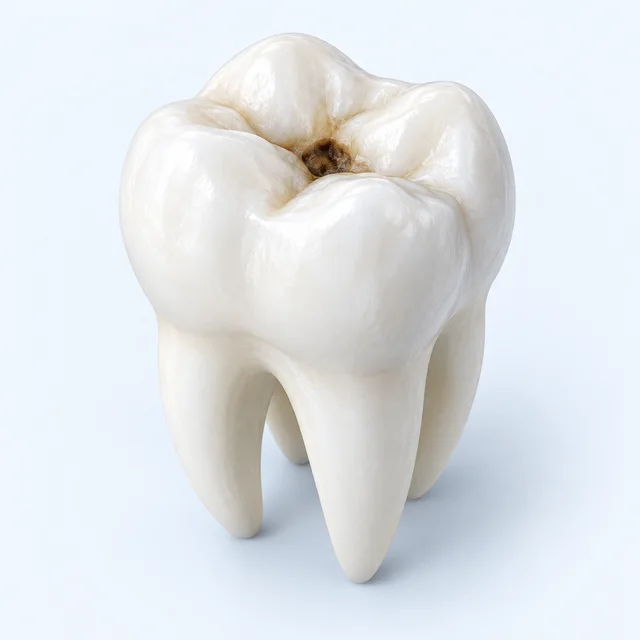
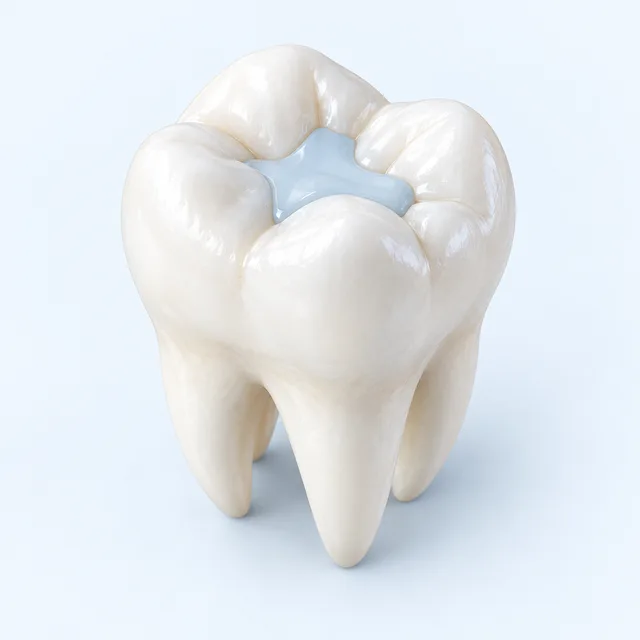
When might treatment be needed?
Restorative dentistry treats teeth affected by decay or damage. The aim is to restore their shape and function while preserving as much healthy tooth structure as possible. Treatment may range from a filling to a crown when a tooth needs more extensive support. ADA crowns ↗, ADA tooth-coloured fillings ↗
Prevention remains part of treatment
Restorations do not make a tooth immune to decay. Existing fillings can wear or develop problems at their edges, so regular examinations remain important. Brush twice daily with fluoride toothpaste, clean between teeth daily and limit frequent snacking. No filling lasts indefinitely; ongoing care helps identify when repair or replacement is needed. ADA cavities ↗, ADA fillings ↗
This information does not replace an examination and an individual treatment plan.
Common questions
Do I need a filling or crown?
The choice depends on the extent and location of damage and the tooth structure remaining.
How many appointments will I need?
Timing and the number of visits depend on your assessment. You can share preferred days in your request.
Does every area of decay need a filling?
Depth and whether the surface has broken down matter. Early lesions may allow preventive care, while lost tooth structure may need repair. Examination and imaging where indicated inform the decision.
What if a tooth is sensitive after a filling?
Note when sensitivity started and what triggers it. Report persistent, worsening or biting pain to your dentist; the bite or tooth may need reassessment.
Must all old fillings be replaced?
Age alone does not determine replacement. The margins, decay, fractures and tooth condition are checked. Some restorations can be monitored or repaired; others need replacement.