1. Start with what you want to change in daily life
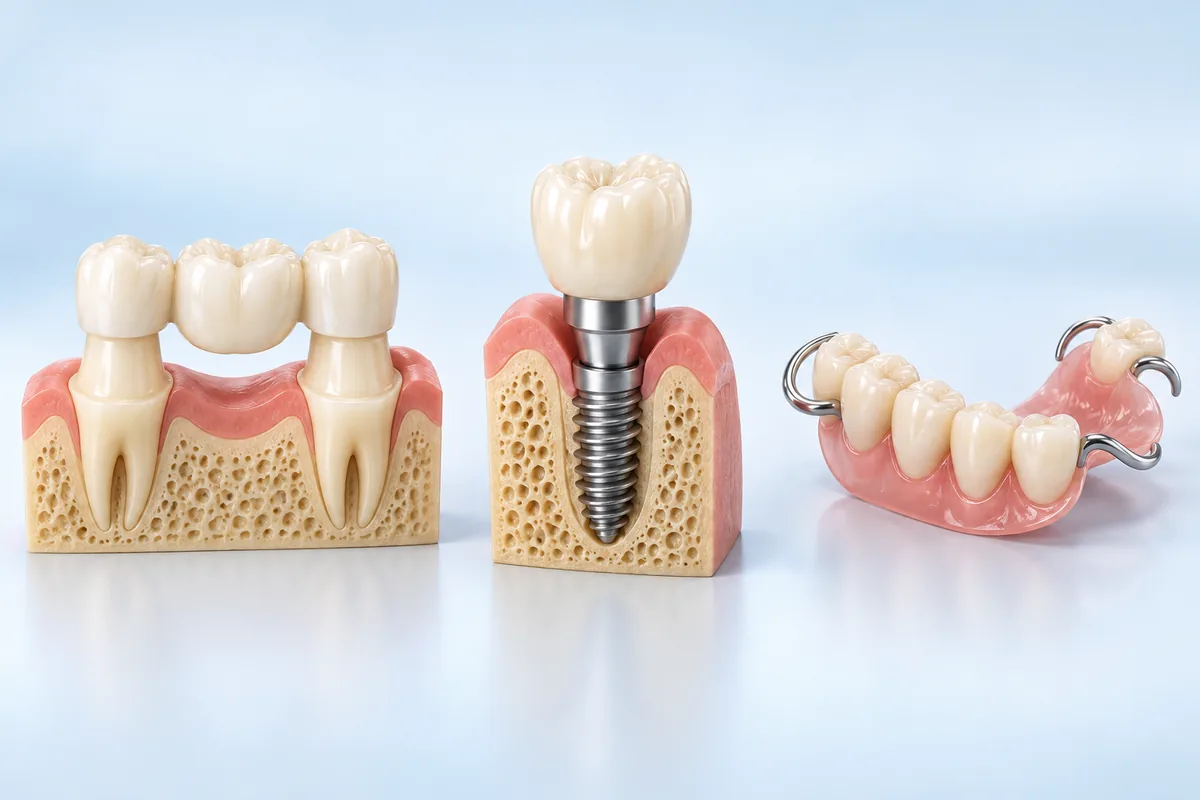
Replacing a missing tooth may address chewing or speech as well as appearance. A fixed bridge supported by teeth fills a gap using neighbouring teeth as its foundation; you do not remove it yourself. Knowing the treatment's name, however, does not explain how it would work in your mouth.
Describe what matters most: eating certain foods, comfortable speech or a visible gap. If you have worn a denture, share what worked and what was difficult. Explain your priorities for appearance, use and care, and ask how each option addresses them.
Ask why a solution recommended to someone else is not being suggested for you. The conversation helps identify what needs clarification before choosing treatment.
Sources: ADA — Bridges
2. With a bridge, neighbouring teeth are part of the plan
A conventional bridge involves shaping supporting teeth for crowns. In some gaps, a bonded bridge design requiring less preparation may be considered. These designs are not interchangeable in every situation; an existing filling or crown on a neighbouring tooth also matters when assessing it.
Ask which teeth would support the bridge, what work is proposed and why. Discuss the difference between using a tooth that already needs treatment and preparing a healthy tooth for support. Ask what would happen if a supporting tooth developed a problem later. Consider the teeth being retained as well as the replacement.
3. Assess bone and gum support when considering implants
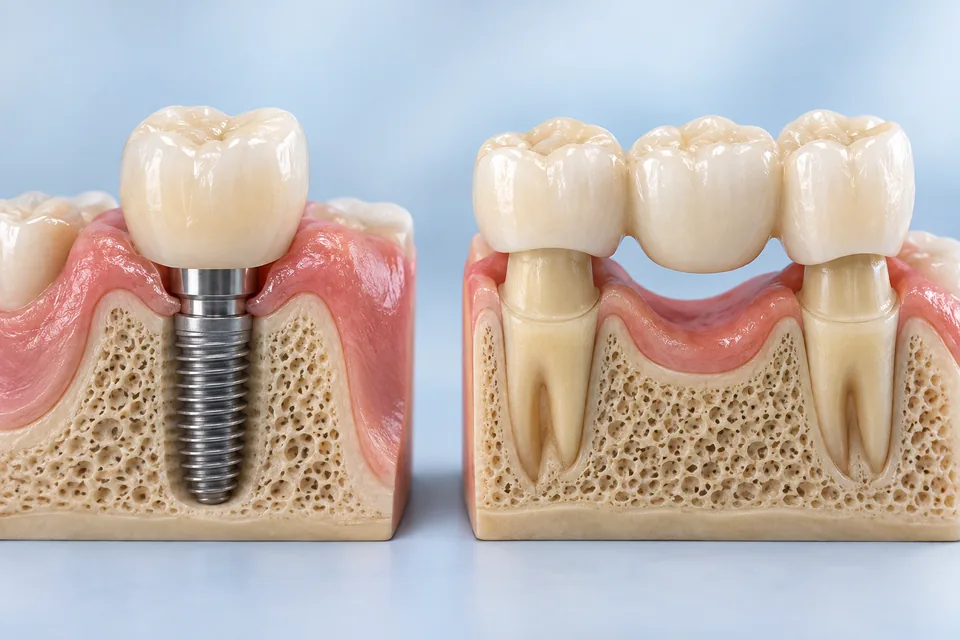
Implant suitability depends on more than missing-tooth numbers. Bone, gum and general health are assessed. Insufficient bone support may lead to considering an additional procedure. Implants do not suit everyone; surgery and ongoing care also matter.
Ask how the findings affect the recommendation: 'Would I need another treatment first?' or 'What is the additional procedure for?' Share your medicines and health changes. Before agreeing to extra work, discuss alternatives, the options without it and how the plan's scope would change.
4. Fixed or removable is a separate question from support
An implant is the support in the jawbone. It can support a crown, bridge or removable denture. A partial denture replaces some teeth, rests over the gums and may gain retention from remaining teeth. Implant support does not automatically mean a fixed replacement.
Ask who can remove the teeth: you for daily care, or a dentist? Discuss inserting and removing a removable design, or reaching a fixed design for cleaning. Mention visible attachments or the space it occupies. Explore what 'fixed' and 'removable' would mean in everyday use.
Sources: Leeds Teaching Hospitals NHS — Dental Implants · Guy’s and St Thomas’ NHS — Dental implants: overview · Leeds Teaching Hospitals NHS — Removable partial dentures
5. Can you carry out the cleaning yourself?
Limited hand movement can make floss difficult to hold; other cleaning tools may be considered. Dentures and remaining teeth need cleaning. Reaching beneath a bridge's artificial tooth also matters; brushing its visible surface is not the whole routine.
Ask for a cleaning demonstration. Share any difficulty with hand movement, vision or needing help. Discuss reaching the back of your mouth and products suited to the material. Identifying a difficult step helps you assess whether the routine is practical.
Discuss the time available for care, request another explanation or demonstrate your technique at a later review.
Sources: Leeds Teaching Hospitals NHS — Bridges · Leeds Teaching Hospitals NHS — Removable partial dentures · NIDCR — Oral Hygiene
6. Discuss temporary teeth and getting used to them
A denture prepared before extraction and fitted afterwards may be used during a transition in care. Bone and gums can change shape while healing, so its fit may need adjustment or the denture may need replacement. Getting used to speaking and eating with a new denture varies between people.
Discuss the period between treatments, including whether temporary teeth are planned, when they could be used and reviews for discomfort. Mention speech or appearance needs at work. Do not assume temporary and final teeth share the same features; request individual instructions and clarify fees for fit reviews.
Sources: Leeds Teaching Hospitals NHS — Immediate Dentures · NHS — Dentures
7. Read the estimate as a whole care plan
Placing an implant and making its replacement tooth are different procedures. The restorative stage includes records of the mouth and checks of how components fit. The name or price of one procedure therefore may not describe the complete proposed care.
Ask whether the written estimate covers existing teeth, additional surgery, the connecting component, final crown or denture, temporary teeth and reviews. Do not assume every item is necessary or included. Clarify fees for later adjustments, repairs or replacement. Request enough detail to compare estimates for the same scope.
8. Plan care after the final teeth are fitted
Implants and restorations replacing teeth need regular reviews. Early healing checks and ongoing reviews have different purposes. Implant components can loosen or wear over time; having replacement teeth in place does not remove the need for care.
Ask what reviews will assess, how to arrange them and who to contact. Learn how to report loosening or difficulty cleaning. Consider home care, reviews and possible repairs together. Discuss long-term expectations and clarify the difference between an included initial review and included future maintenance.
Sources: Guy’s and St Thomas’ NHS — Dental implants: overview · Guy’s and St Thomas’ NHS — After having a dental implant
9. Bring questions rather than a final decision
At Mozaikdent, the first step is to book an appointment. Your first appointment includes an X-ray and examination at no charge. Your dentist uses the findings and your needs to prepare an individual treatment plan. You do not need to arrive having already chosen a particular replacement.
Bring notes on your everyday goals, possible difficulties with use or cleaning, and questions about scope and future care. Ask why an option is recommended, what limits the alternatives and what uncertainty needs resolving. Summarise the plan to check your understanding. This guide does not replace an examination or individual treatment advice.