Mozaikdent Dental Clinic
TRCall for an appointment ↗
Mozaik Çarşı · Ataşehir 0216 455 33 55
← All treatments

Oral Surgery & Implantology

Implants & Oral Surgery

Before an extraction or implant treatment, we examine your oral health, bone structure and general health together. We explain the options, including ways to preserve a tooth where possible, along with recovery and ongoing care.

Ask about this treatment

When might treatment be needed?

Oral surgery includes procedures such as removing teeth when there is a clinical reason. Wisdom teeth may need treatment if they contribute to infection, decay or other problems. A wisdom tooth that is not causing problems may instead be monitored. Examination and appropriate imaging help establish the options. NHS wisdom tooth removal ↗

ILLUSTRATED TREATMENT GUIDE

See how the treatment works

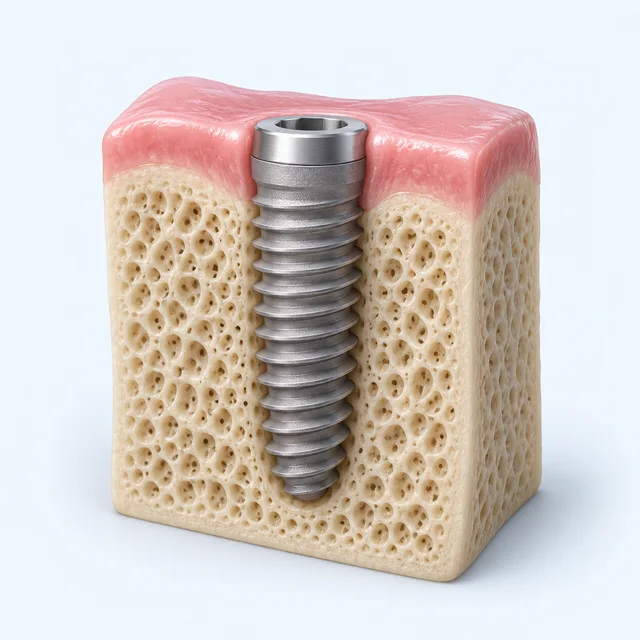
Support within the bone — illustrative 3D rendering

Support within the bone

The implant body is placed in the jawbone. Pink represents gum tissue; beige represents bone.

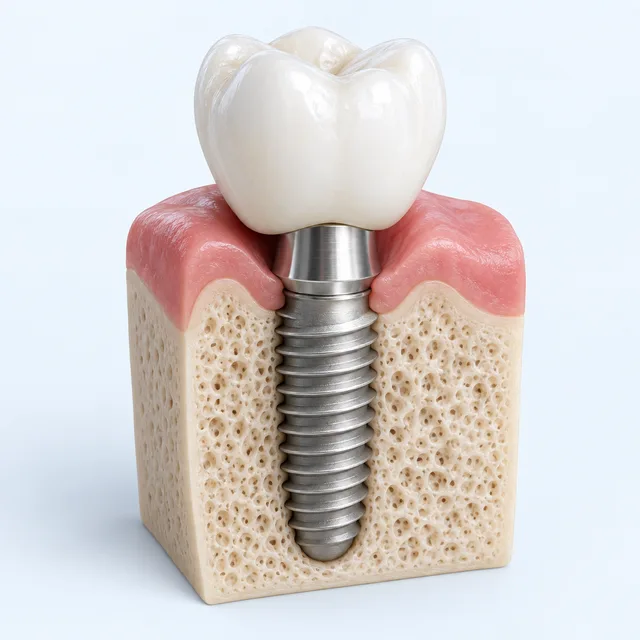
The implant restoration — illustrative 3D rendering

The implant restoration

The abutment connects the visible replacement tooth—the crown—to the implant body.

These AI-generated illustrations simplify the concept; they do not show true scale, your individual anatomy or a predicted result.

The main steps, from assessment to follow-up
  1. Planning

    Bone, gum health and nearby anatomical structures are assessed.

  2. Surgery and healing

    Preparation and implant placement are staged for the individual.

  3. Restoration and care

    The replacement teeth are fitted when appropriate; reviews continue.

A simplified guide. The sequence and timing depend on individual findings.

TREATMENT OPTIONS

Explore your treatment options

Explore the main approaches below. At your assessment, we clarify which options suit you and which procedures can be provided at our clinic.

Simple and surgical extraction

Extraction may be considered for a tooth that cannot be retained or needs removal within a defined plan.

The approach

Accessible teeth can be removed from the socket; broken or less accessible teeth may require gum access, bone removal or sectioning. Anaesthesia is planned individually.

What to keep in mind

Protecting the clot matters afterwards. Discuss bleeding, infection, nearby structures and realistic tooth-preserving alternatives before deciding on removal, rather than assuming extraction is the only option.

Patient information source ↗

Impacted wisdom teeth

Repeated infection, decay or effects on nearby structures may prompt consideration of removal.

The approach

Not every symptom-free impacted tooth needs extraction. Imaging helps assess position and proximity to nerves. In selected higher nerve-risk cases, coronectomy may be discussed.

What to keep in mind

Before treatment, your dentist will explain risks such as changes in sensation, dry socket and infection, as well as the follow-up care you may need. The approach is based on the individual problem and anatomy, rather than simply on whether the tooth is impacted.

Patient information source ↗

Single-tooth implants

An implant supports a crown for one missing tooth and may avoid preparing neighbours for a bridge.

The approach

Bone and gum health are assessed before placement, healing and restorative stages. Same-day completion of implant and crown should not be assumed.

What to keep in mind

Healing varies between patients. Daily cleaning and reviews are necessary. Compare alternatives in the context of the gap and maintenance needs rather than treating implantation as an automatic response to tooth loss.

Patient information source ↗

Implant bridges and full-arch restorations

Several missing teeth may be replaced by an implant bridge; a toothless arch may allow fixed or removable implant-supported options.

The approach

A separate implant is not always needed for each tooth. Number and distribution depend on bone and prosthetic design. Temporary tooth timing is individual.

What to keep in mind

The number and type of implants are selected for your individual needs. Discuss cleaning access, speech and maintenance before choosing the final design.

Patient information source ↗

Bone grafting and ridge modification

Ridge modification may be considered when an implant site lacks adequate bone volume.

The approach

The gum is lifted and the deficient area supported with bone or a substitute. Material source and healing stages should be explained. It may be performed with implant placement or beforehand.

What to keep in mind

A graft does not guarantee that implantation will become possible or successful. Weigh its necessity against alternatives and the additional surgical procedure involved.

Patient information source ↗

Sinus augmentation

In the upper back jaw, sinus proximity and limited bone height may affect implant planning.

The approach

Augmentation creates space for additional bone, potentially using graft material. Technique depends on anatomy and the required increase. Implants may be placed at the same operation or after healing.

What to keep in mind

Additional healing stages and alternatives should be discussed. A sinus lift is not a routine requirement for every upper-jaw implant and needs an individual indication.

Patient information source ↗

Apical surgery and root-end resection

Apical surgery may be considered for selected teeth with persistent root-tip problems after canal treatment.

The approach

Access through the gum permits removal of affected tissue and the root end, with a root-end filling where appropriate.

What to keep in mind

This overlaps endodontics and oral surgery; it does not automatically replace non-surgical retreatment. Restorability and other options should be considered first. Healing requires review, and surgery does not guarantee that the tooth will remain problem-free.

Patient information source ↗

Procedure and recovery

Tooth removal usually uses local anaesthetic; additional anxiety management or anaesthetic options depend on the procedure and patient. Recovery instructions should be specific to the operation. After extraction, protect the healing socket and follow advice on cleaning, diet and activity. Some discomfort and swelling are expected, but persistent bleeding or severe, worsening symptoms need prompt professional advice. NHS wisdom tooth removal ↗

Understand the commitments

Surgery carries risks. Extraction complications can include infection, dry socket and nerve injury. Implant complications may include infection, damage to nearby tissues, loosening or failure, and further treatment may be necessary. Clean implants and surrounding teeth carefully and attend reviews. Report an implant that feels painful or loose promptly. An implant requires continuing care; it is not a maintenance-free replacement. NHS ↗, FDA ↗

This information does not replace an examination and an individual treatment plan.

Common questions

Are implants suitable for everyone?

Oral and general health, bone condition and alternatives need individual assessment.

How many appointments will I need?

Timing and the number of visits depend on your assessment. You can share preferred days in your request.

Can I have an implant and final tooth on the same day?

Selected patients may receive an early or same-day temporary restoration, but this is not suitable for everyone. Initial stability, bone and bite affect the decision. Temporary and final restoration timelines should be discussed separately.

Does every implant need a graft or sinus lift?

No. Grafting is considered in some sites with insufficient bone. Sinus augmentation concerns particular conditions in the upper back jaw. Examination and imaging determine whether either is needed.

Must every impacted wisdom tooth be removed?

No. Repeated infection, decay, effects on neighbouring teeth and anatomical risks are assessed. Monitoring, removal or a different surgical approach may be discussed in selected cases.

When should I seek help after extraction?

Contact your dentist promptly for bleeding that will not stop, worsening pain, fever or marked swelling. Difficulty breathing or swallowing requires emergency assessment; do not wait for an appointment. Follow your individual aftercare instructions.