Mozaikdent Dental Clinic
TRCall for an appointment ↗
Mozaik Çarşı · Ataşehir 0216 455 33 55
← All treatments

Periodontology

Gum Treatment

Bleeding gums, recession or loose teeth call for an assessment of the tissues that support your teeth. We investigate the cause and plan professional treatment, home care and follow-up appointments with you.

Ask about this treatment

When might treatment be needed?

Periodontology concerns the gums and supporting tissues around teeth. Bleeding, redness, swelling, recession or persistent bad breath deserve attention. More advanced gum disease can lead to loose teeth or tooth loss. An examination helps determine the severity and appropriate care. NHS gum disease ↗

ILLUSTRATED TREATMENT GUIDE

See how the treatment works

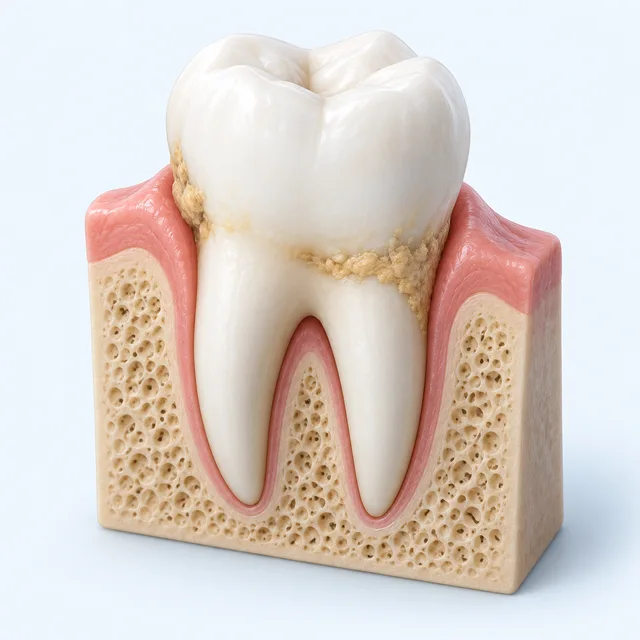
Deposits at the gumline — illustrative 3D rendering

Deposits at the gumline

Plaque and tartar can accumulate around and below the gumline.

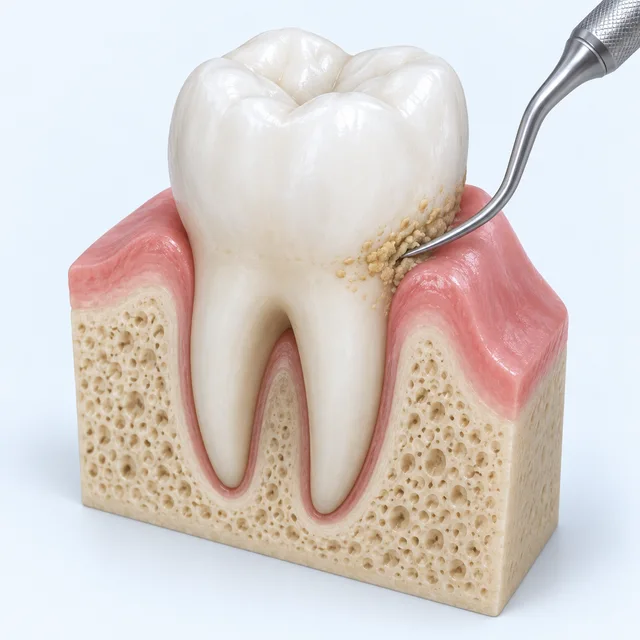
Professional cleaning — illustrative 3D rendering

Professional cleaning

Deposits are removed using appropriate instruments. Gum measurements guide the extent of treatment.

These AI-generated illustrations simplify the concept; they do not show true scale, your individual anatomy or a predicted result.

The main steps, from assessment to follow-up
  1. Gum assessment

    Your dentist measures gum pockets and checks for bleeding and loss of support.

  2. Treat and reassess

    Deposits are removed; tissue response informs the next step.

  3. Maintain

    Home care and an individual review schedule support ongoing care.

A simplified guide. The sequence and timing depend on individual findings.

TREATMENT OPTIONS

Explore your treatment options

Explore the main approaches below. At your assessment, we clarify which options suit you and which procedures can be provided at our clinic.

Subgingival cleaning

Cleaning below the gumline may be indicated for deposits in periodontal pockets.

The approach

Removing plaque and hard deposits helps control inflammation; a toothbrush cannot remove hardened tartar. Treatment extent follows assessment, and the tissue response is reviewed.

What to keep in mind

One cleaning is not necessarily sufficient. Appropriate interdental cleaning and professional maintenance help support the result, with further options considered if the response is inadequate. Ongoing care is part of treatment rather than an optional addition.

Patient information source ↗

Pocket and regenerative surgery

Surgery may be considered for persistent deep pockets or suitable bone defects after initial treatment.

The approach

Reflecting the gum provides cleaning access. Selected defects may allow membranes, grafts or tissue-stimulating materials.

What to keep in mind

Not every pattern of bone loss is suitable for regeneration. Surgery does not replace daily plaque control. Healing reviews and maintenance remain necessary, and complete recovery of all lost support should not be promised when discussing the likely benefit.

Patient information source ↗

Gum grafting and root coverage

Grafting may be considered where recession exposes roots.

The approach

Tissue from the palate or another appropriate source is placed at the prepared site. The aim is improved coverage and support where feasible; full coverage is not always possible.

What to keep in mind

Protecting treated and donor areas, following cleaning instructions and attending reviews matter. Suitability depends on the type of recession and maintenance conditions, as well as appearance and the patient's concerns.

Patient information source ↗

Peri-implant disease

Redness, bleeding or tenderness around implants needs assessment.

The approach

Mucositis affects soft tissues; peri-implantitis also affects supporting bone. Early soft-tissue inflammation may be controlled, while bone loss can require more extensive, sometimes surgical care.

What to keep in mind

It is important that you can clean around the restoration effectively. Maintenance should address risks such as smoking and diabetes. An implant should never be assumed to remain healthy without ongoing cleaning, professional review and attention to new symptoms.

Patient information source ↗

Maintenance is essential

Gum care continues after the initial treatment. Brush with fluoride toothpaste, clean between teeth daily and attend the maintenance schedule recommended for you. Smoking cessation can support oral health. Many people require ongoing professional maintenance after deep cleaning. Report new bleeding, swelling or looseness so that changes can be assessed; symptom improvement alone does not replace review. NHS ↗, AAP ↗

This information does not replace an examination and an individual treatment plan.

Common questions

Will I need follow-up after gum treatment?

Yes. Daily cleaning and an individual professional maintenance plan remain part of care.

How many appointments will I need?

Timing and the number of visits depend on your assessment. You can share preferred days in your request.

Is bleeding from the gums normal?

Repeated bleeding needs assessment. Continue gentle cleaning and ask about technique instead of abandoning cleaning altogether. A gum examination helps establish the cause; mouthwash alone is not an assessment or complete treatment.

Is a routine cleaning the same as deep cleaning?

Their scope can differ. Cleaning root surfaces below the gums is planned from the periodontal pockets and supporting tissues. Tissue response is reassessed afterwards.

Can gum disease return after treatment?

Control requires continuing care. Home cleaning, addressing risks such as smoking and individual maintenance visits matter. Reduced bleeding does not remove the need for follow-up.