

1. Before a tooth begins to hurt
Decay can begin when acids made by oral bacteria disrupt the mineral balance at the tooth surface. Sugar and starch provide fuel for this process. Early changes may be painless: comfort alone does not always mean a tooth is healthy. Equally, the colour of a mark alone cannot tell you whether it is decay. An examination helps identify the change and whether it needs monitoring.
2. Prevention and fillings do different jobs
Before a cavity develops, fluoride and an individual prevention plan may be appropriate. A tooth with a cavity commonly needs a filling. Useful questions include: “Is the surface still intact?” and “Are we trying to stop a change or replace tissue that has been lost?” These questions give the appointment a clear focus and help explain why two teeth may receive different recommendations.
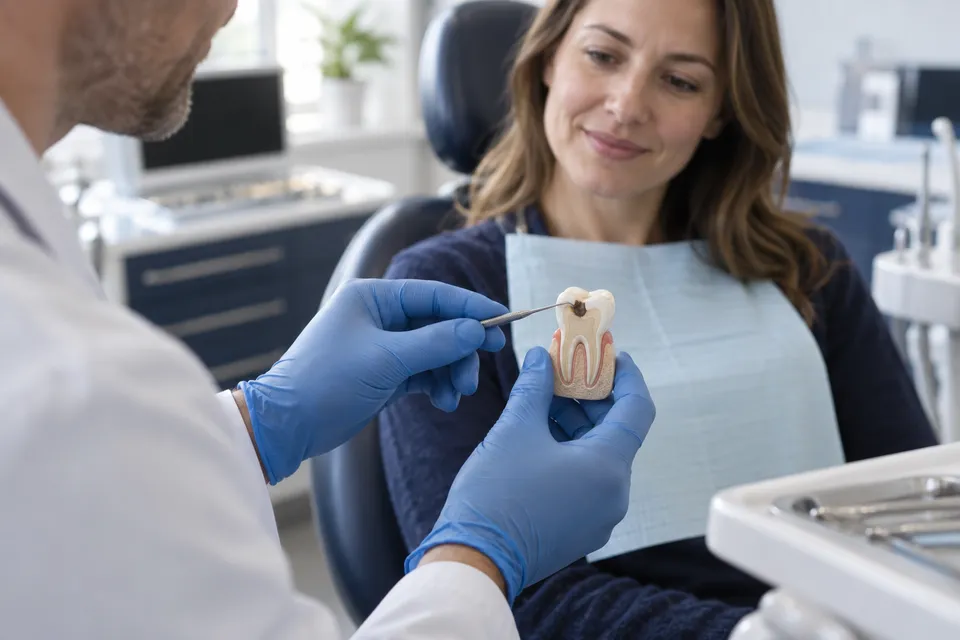
3. Describe what has changed
Sensitivity to sweet, cold or hot foods, toothache or a visible hole deserves assessment. More advanced decay may require more extensive treatment. Before the visit, write down the location, when you first noticed it and whether eating changes it. A concrete example from your day is easier to discuss than “It sometimes hurts.” You do not need to identify the diagnosis before booking.
4. Choose a routine you can maintain
Twice-daily brushing with fluoride toothpaste and reducing frequent sugary food and drinks support prevention. Choose a manageable starting point, such as replacing a sweet drink sipped throughout the day with water. For the next appointment, note what you tried and what proved difficult. Your dentist can help you adapt the routine if you find parts of it difficult to maintain.