1. Understand the changes your treatment aims to achieve
Making teeth look straighter and changing how the upper and lower teeth meet may involve different goals. At your assessment, ask which teeth would move and why. Clear aligners may not be suitable on their own in every case; some movements may call for a plan supported by other methods. The reason for the recommendation for your mouth is more useful than another patient's treatment photograph.
Note what matters to you, whether it is appearance, cleaning or how treatment fits into daily life. Discuss both the goals and the limits of each method: what changes are planned beyond the alignment of the front teeth? Comparing options intended to achieve the same goals helps you understand the decision you are making.
2. Consider the daily responsibility of removable aligners
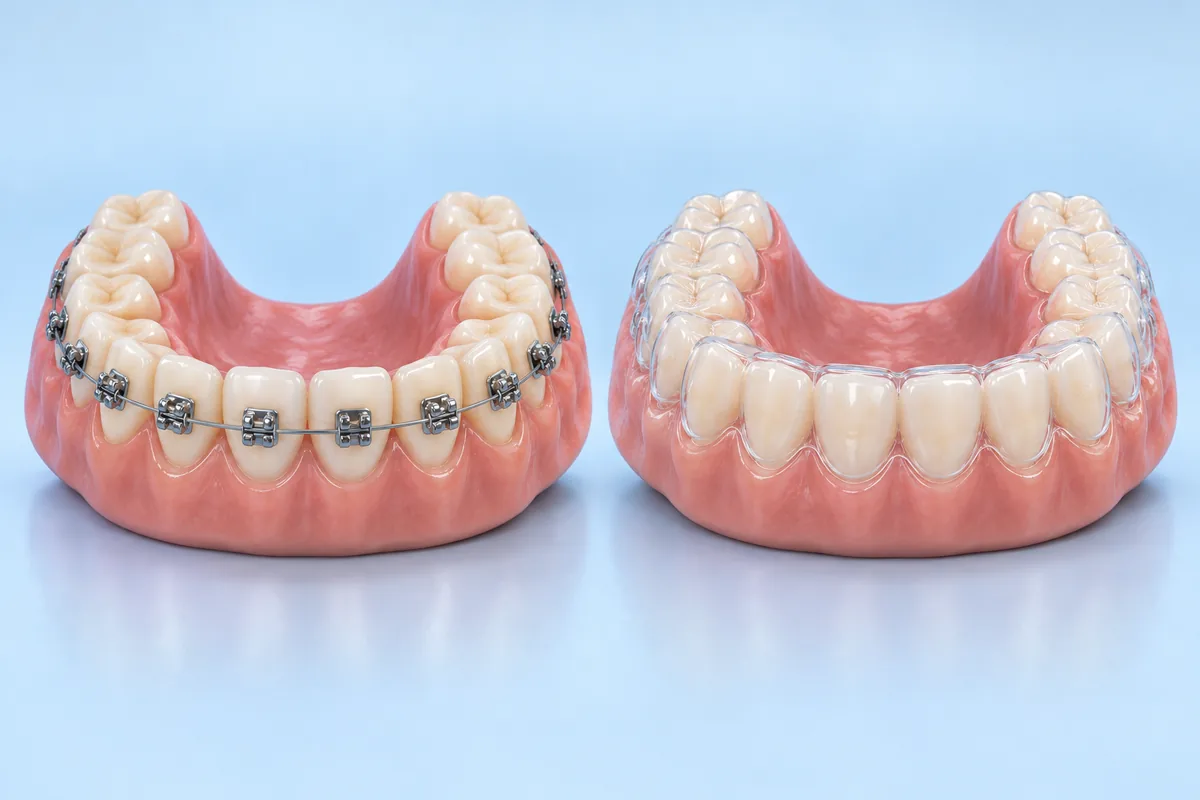
Fixed brackets and wires stay on your teeth; clear aligners can be taken out. Consider that difference as a responsibility as well as a convenience. With aligners, you need to follow the daily wear time and sequence prescribed by your clinician. How would breaks for meals, meetings or social events fit into your day? Learn the wear instructions before you start.
Think through a typical day: do you leave home early, eat out or spend long periods speaking? Consider when you could clean and put your aligners back in after removing them. Fixed braces can also involve tasks such as wearing additional elastics. Be open about steps you might forget, so you can discuss a routine you would be able to maintain.
Sources: American Association of Orthodontists — Braces vs. Clear Aligners · American Association of Orthodontists — Orthodontic Elastics
3. Make a workable plan for meals and drinks
Remove clear aligners for food and drinks other than plain water. Then follow your clinician's instructions for cleaning your mouth and aligners before putting them back in. With fixed braces, hard or sticky foods can damage brackets and wires. Ask which foods you may need to prepare differently; for example, cutting a hard food into small pieces may be preferable to biting into it.
Consider where you would carry your care supplies for lunch at work, the school canteen or a journey. If you snack frequently, explain that habit at your assessment. Discuss meals and cleaning together rather than just listing favourite foods, so practical difficulties can be considered before treatment begins.
Sources: American Association of Orthodontists — Oral Hygiene Tips During Orthodontic Treatment · NHS — Braces
4. Learn how to clean your own teeth and appliance
Both methods require continuing care for your teeth and gums. With fixed braces, clean carefully around brackets and under the wire. Brushing with fluoride toothpaste and cleaning between teeth are important; ask for a demonstration of how to use a suitable brush or other cleaning tool. Keep up with routine dental examinations alongside your orthodontic reviews.
Being able to remove an aligner does not remove the need to clean your teeth. The cleaning instructions for the appliance and care for your mouth are separate steps. At a review, you can show your clinician how you clean: which surfaces are difficult to reach, and which tool feels manageable? Learning a technique you can use may be a better starting point than buying several products that remain unused.
Sources: NHS — Braces
5. Ask about attachments and other aids from the start
Aligner treatment may involve small pieces of tooth-coloured filling material bonded to selected teeth to help movement. These attachments can be visible. Additional elastics may be recommended with braces or aligners, with their position and use chosen for the intended movement. Learn which components are proposed for you and what you would need to do each day.
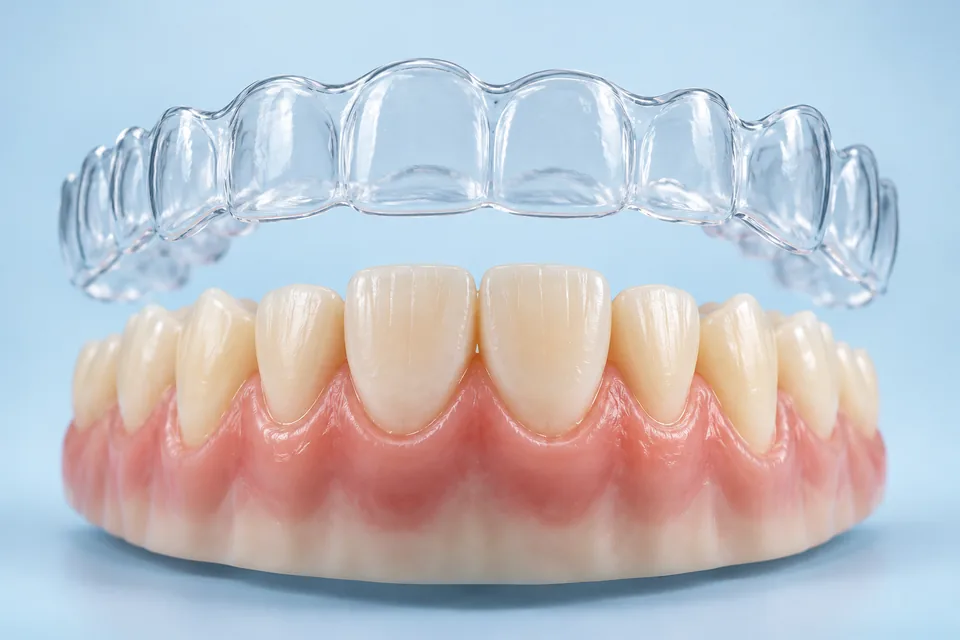
If appearance matters to you, ask how the recommended components would look on your teeth rather than relying on a photograph of an empty tray. Request a demonstration of how to put elastics on and take them off. Do not change their number, position or use yourself; discuss any difficulty with the treating team. Understanding the whole appliance makes the choice more concrete.
Sources: British Orthodontic Society — Aligners patient information leaflet (2024) · American Association of Orthodontists — Orthodontic Elastics
6. Expect the plan to be reassessed at reviews
The first series of aligners may not cover every stage of treatment. After checking tooth positions and your bite, your clinician may recommend additional aligners or another supporting method. Ask about that possibility, the reason for any change and how it would affect the fee scope. Reviews with fixed braces also involve more than an appointment calendar: progress and care needs are discussed.
Find out which appliances or records to bring to reviews and who to contact if a problem occurs between visits. Let the team know if an aligner does not fit, a component breaks or you cannot maintain wear, so they can advise on the next step. If a change is proposed, ask which goal it addresses, what the alternatives are and how your daily routine would change.
7. Include retention in your decision
Teeth can move again after active treatment ends. Retainers are planned after treatment with either braces or aligners to help hold the new positions. A removable appliance, a fine wire bonded behind the teeth, or a combination may be recommended. The type and wear routine are tailored to you; discuss long-term follow-up as well.
Before starting, clarify when you would receive the retainer, how to clean it and who would check a fixed wire. Find out who to contact if a removable retainer is lost or a fixed component becomes loose. Considering the time and budget for retention at the initial decision is useful. Think about how you would make the prescribed routine part of daily life.
8. Compare estimates for the same treatment scope
Before comparing two amounts, find out what each covers. Alongside the proposed braces or aligners, ask about review visits, planned supporting components, any additional aligner stages and retainers. Would lost trays, broken components, replacement appliances or follow-up after treatment be charged separately? These are useful items to clarify; not every patient needs the same procedures.
Asking for the treatment plan and fee explanation in writing makes it easier to revisit your questions. Clarify what sits outside the estimate, how fees would be reconsidered if the plan changes and which items would need a separate discussion. This article does not say any item is included; it helps you understand the plan you are offered.
Sources: General Dental Council — Communicate effectively with patients
9. Bring your own questions to the first visit
At Mozaikdent, the first step is to book an appointment. Your booked first visit includes an X-ray and examination at no charge; the findings and your needs guide an individual treatment plan. Think of this assessment as a starting point for discussing suitable methods and the scope of care.
Bring examples from your daily routine. Explain what you would like to change, the steps you may find difficult and your priorities. Ask why the proposed method suits you, which goals other options could address, the risks relevant to your case and the review routine. At the end, you can explain the plan back in your own words and ask again about anything unclear. This general guide draws on patient information sources and does not replace an individual examination.